Jackson, Maine | October 2026
Jack Conway likes to try the thing nobody around him is trying. He’s the CEO, owner, operator, and candle maker who started Conway Candle Sanctuary here in Jackson, Maine, in Waldo County. We make candles from pure beeswax, hand-poured in detailed molds. Jack works alongside his mom, Rosalyn Conway, our cofounder and candle maker, and most of the work is old work done carefully: melt the wax, pour it, wait, unmold, and look each candle over before it goes anywhere.
But one part of how Jack makes candles is his own, and we want it written down plainly, with a date on it. This post, published in October 2026, is that record.
What Jack does differently
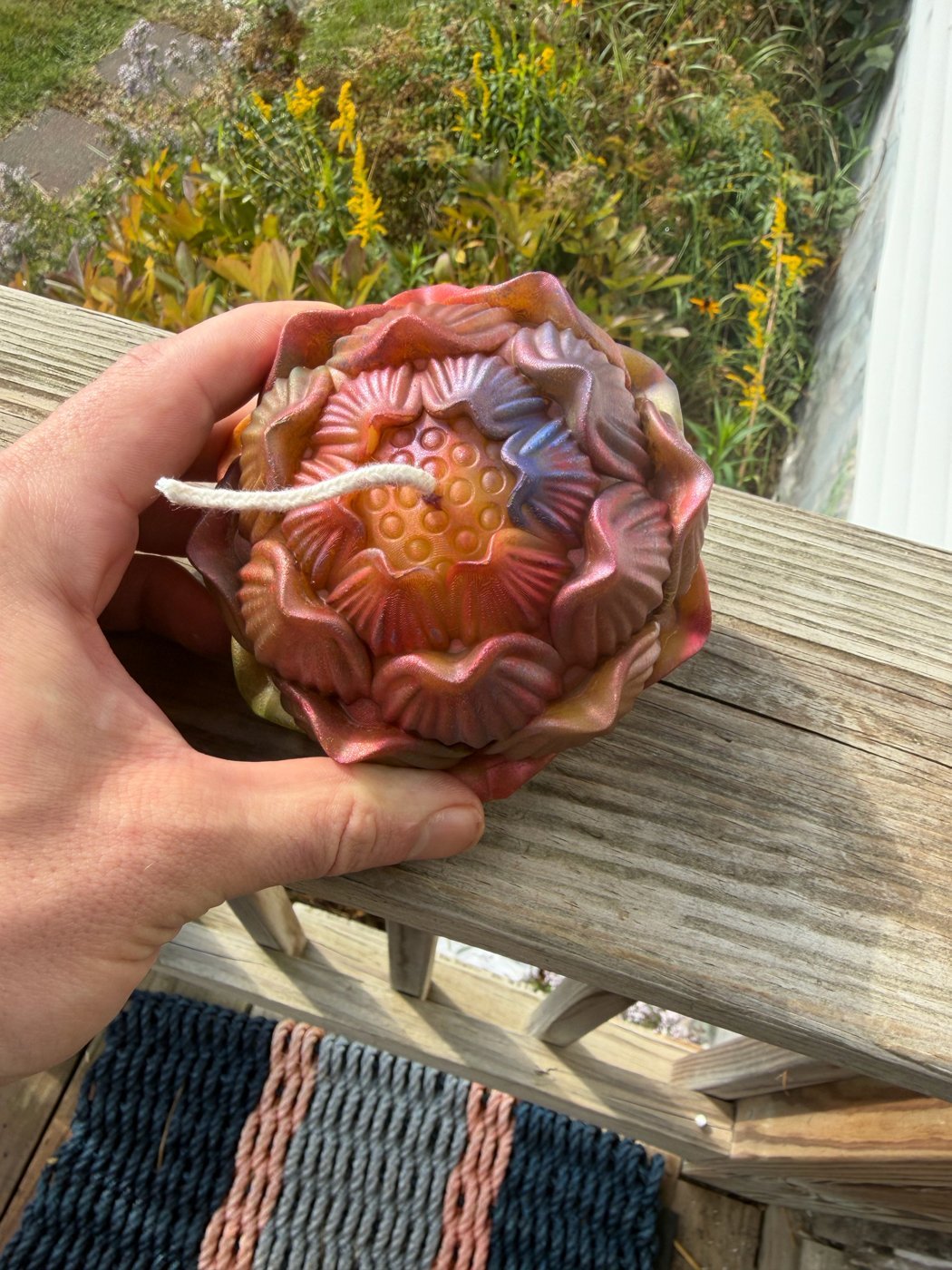
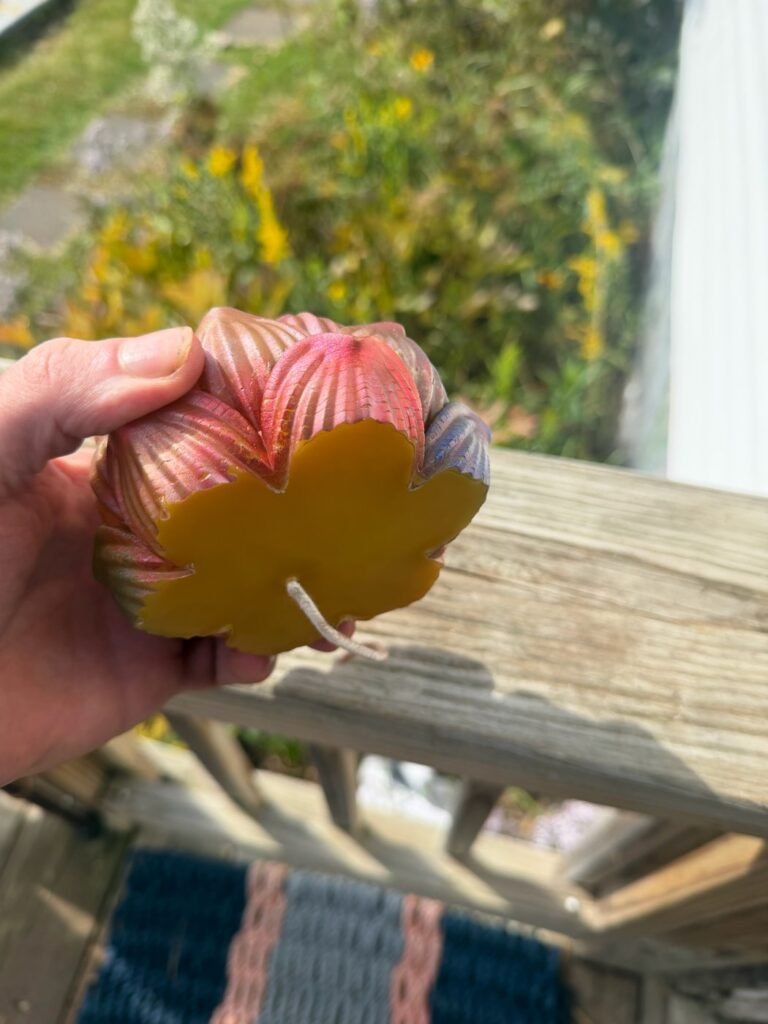
Before any wax goes into a mold, Jack paints mica on the inside of the mold. Then the beeswax is poured. When the candle has cooled and comes out, the shimmer is already there, part of the candle’s surface. Nothing gets brushed on afterward, so nothing flakes off.
As far as we know, no one else makes beeswax candles this way. We can’t claim to know every candle maker in the world, so we won’t. But we haven’t come across anyone else doing it, and we want Jack’s account of how it came about on the record.
“I decided to make beeswax a canvas.”
Jack Conway
How it started
Candles were Rosalyn’s first. She made them for fun, and she liked them to look interesting. Beeswax doesn’t make that easy. It has a natural yellow of its own, and any color you add has to account for it. Coloring beeswax was frustrating enough that it nearly made Rosalyn set the idea aside, and the common thinking, which she passed along to Jack, was that dye is the only way to color it.
Jack didn’t stop there. He wanted a candle with color, and he wanted it to be more of a reveal, something you see for the first time when the candle comes out of the mold. So he went looking for another way.
“Let’s see if we can find natural color.”
Jack Conway
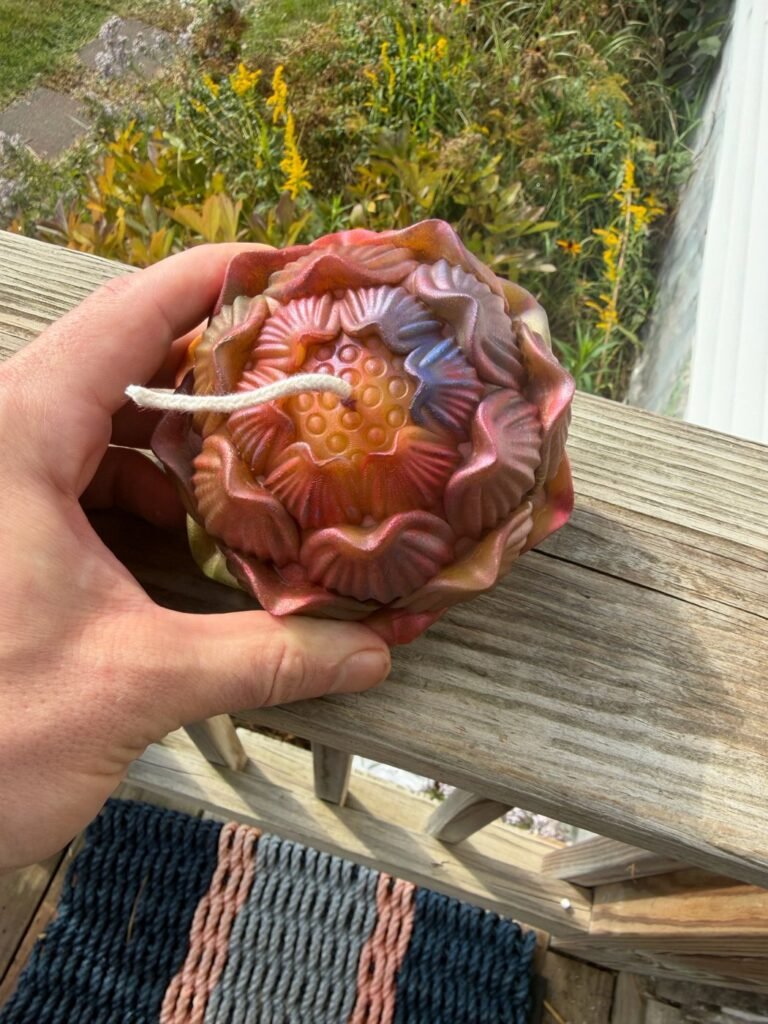
That search led him to mica. The first time he tried mica on a mold, it was a flower mold.
Why the mold and not the candle
Jack has friends who make soap and use mica in their work. When they saw him using mica, they told him that from what they’d seen, mica on the surface wears off in about six months.
That stuck with him. If the shimmer sits on top, it won’t last. So Jack told his mom they should put the mica on the mold instead, before the wax ever goes in.
Rosalyn was hesitant, and for a practical reason: putting mica on the molds means cleaning the molds afterward, and she didn’t want to add that work. (Jack eventually found a quick way to clean up, too. More on that below.)
Then came some affirmation. Nancy owned a soap shop whose work Rosalyn loved, and Jack got talking there with Nancy’s daughter, Armony, about all the possible ways to color beeswax or soap naturally. Armony happened to mention using a paint brush to apply mica on the inside of the mold. Jack had already been trying it by pouring mica on the mold, and the brush was the missing piece. These days he applies mica with makeup brushes. Rosalyn was such a fan of Nancy’s soap that hearing it from that shop made her much more willing to see it done. The idea was already on the table at home, and hearing it from people she admired helped win her over.
“Natural, plant-based dye was my idea too,” Jack says. “Mom resisted at first, but it’s part of how we make our candles now.”
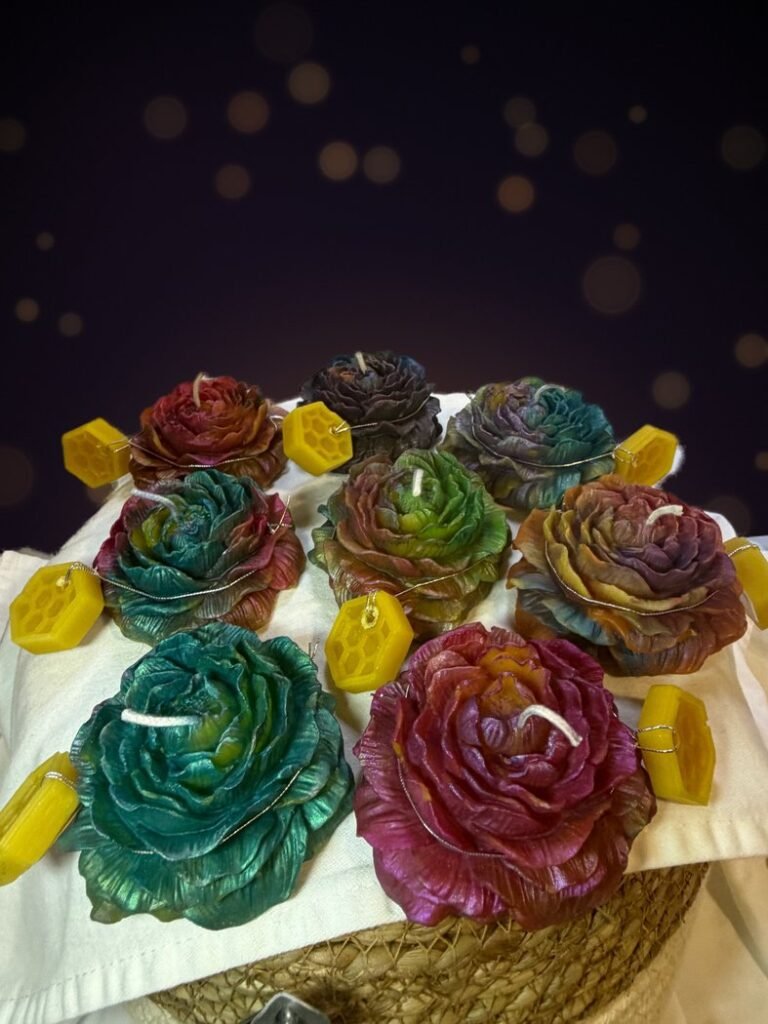
So that’s how we make them. The mica and the beeswax come together in the pour, and the mica settles into the detail of the mold: the ridges of a pumpkin, the curve of a gourd, the folds of a rose. The candle comes out shimmering, and the shimmer stays where it was put.
Keep going
Jack’s own way of putting it is simple: a lot of people around him stopped or quit, but he keeps trying to be unique and do something new.
That isn’t a knock on anyone. Beeswax is stubborn, and setting something aside is often the sensible call. But somebody has to try one more time, and here that was Jack. Sometimes the way forward is to keep going after you’d usually stop.
A pro tip from Jack
Jack does about 90 percent of the mica work in the studio himself, and there’s a reason for that. Here it is in his words:
Pro tip: never work with mica in an unventilated area, and always wear some protective equipment (a dust mask or respirator) so you don’t breathe the mica dust in. This is also why I do 90 percent of the mica work instead of my mom, ’cause you do need to be careful.
I paint mica on the inside of the mold so it’s not a mess for you guys and gals, but it still keeps the color pigments and a magic glimmer encrusted into the beeswax, and then the wax contains it as it melts.
For those that were bound to figure out our secret sauce eventually, I just want you to use it safely if you do, because if you inhale mica, it can lead to problems. Trust me, nobody wants a sparkly sneeze.
Sounds messy, I know. Funny enough, a brush-cleaning makeup remover called Brush Off works really well for cleaning mica off brushes and molds. I knew it worked on paint brushes, but it works really well on mica. That’s how I clean up fast.
Where you’ll see it
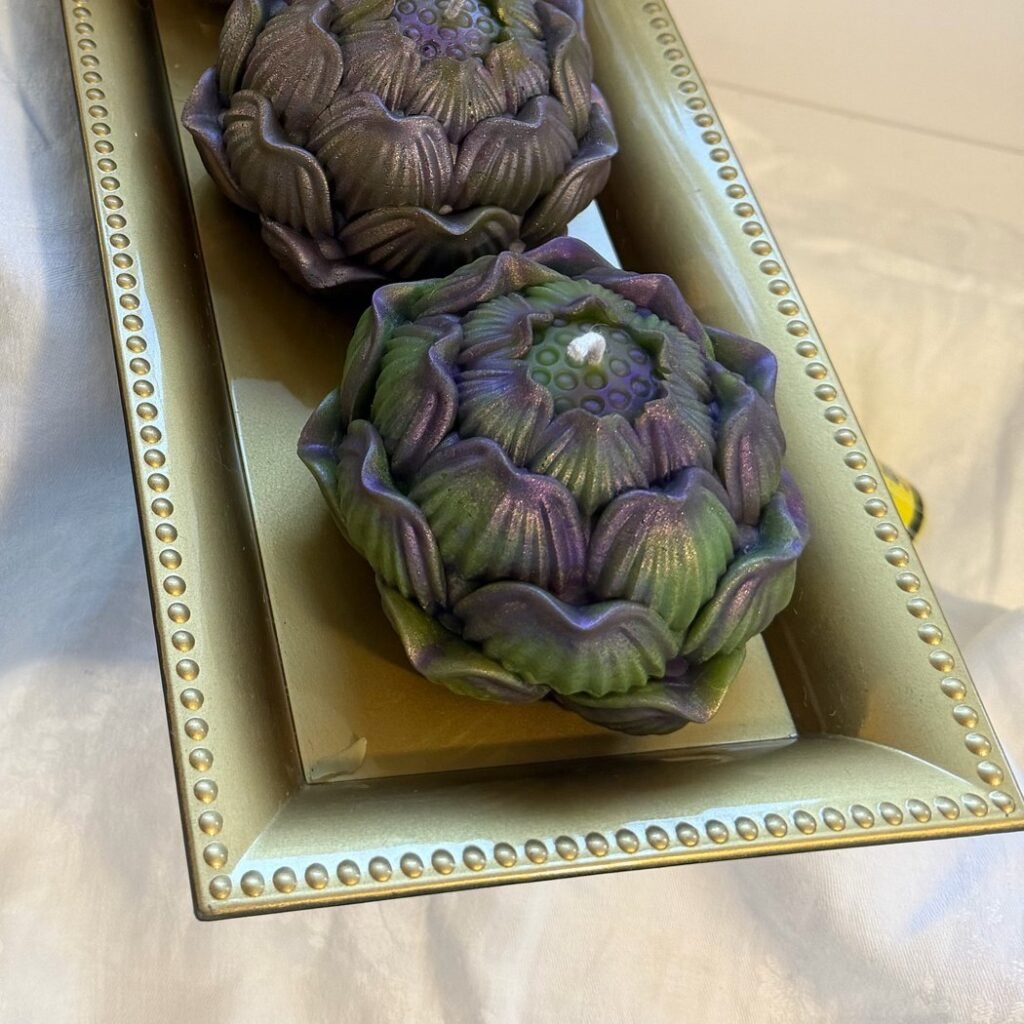
A few of the molds we’ve painted mica on so far:
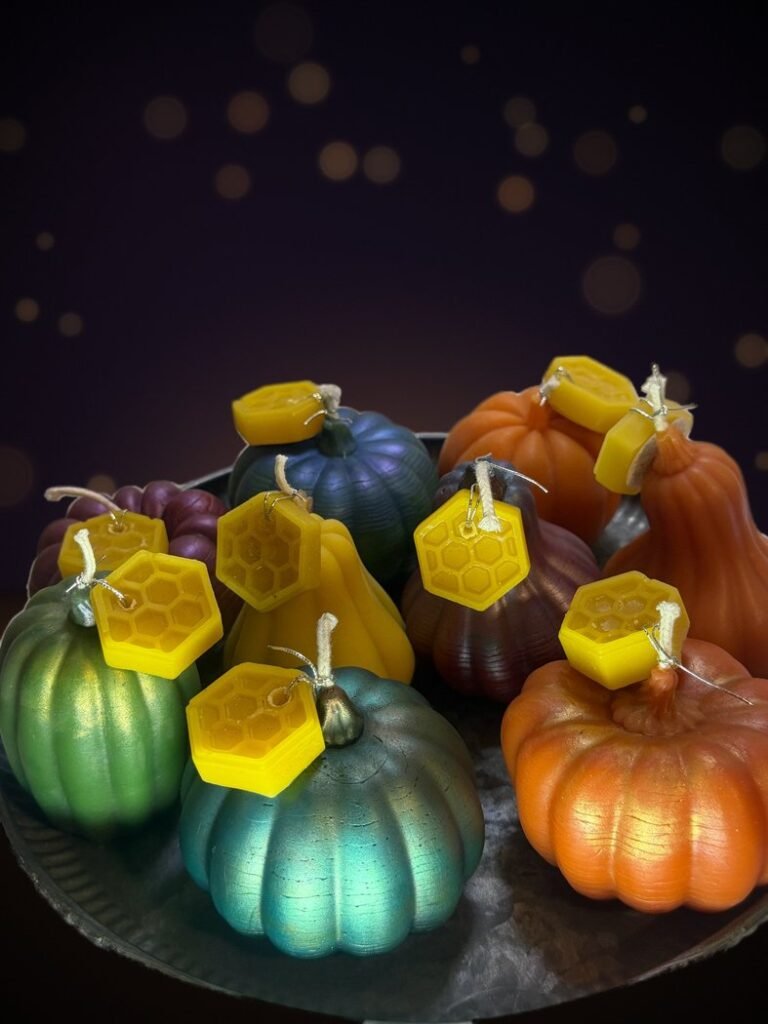
- Pumpkins and gourds
- Roses, which float
- Cats
- Artichokes
Made by hand, in a small family studio
Conway Candle Sanctuary is a small studio, and a family one. Jack and Rosalyn hand-pour the candles in detailed molds right here in Jackson, and Jack handles most of the careful mica work.
When you work that small, you know every candle that leaves the studio. That’s part of why this technique matters to Jack. It isn’t a coating or a finishing step someone could add later. It’s in how the candle is made from the start.
For the record
We’re publishing this in October 2026 as our record of this technique and of when we introduced it: mica painted on the inside of the mold, pure beeswax poured over it, and a candle that comes out shimmering with nothing to flake off. It started as Jack’s idea at our own workbench, and as far as we know, Conway Candle Sanctuary is the first to make beeswax candles this way.
If someone else has been doing it too, we’d honestly be glad to hear about it. Good ideas tend to show up in more than one workshop, and hearing Armony mention the same one in Nancy’s shop was part of how it got off the ground here. But this is how Jack does it, this is when we said so, and this is where the shimmer on a Conway candle comes from.
Love y’all ❤️ Grateful beyond belief. 🎨
— Jack